
Our commitment to reporting on solutions
CT Community News has been part of a nationwide project this year to implement Solutions Journalism. Here's what we learned.

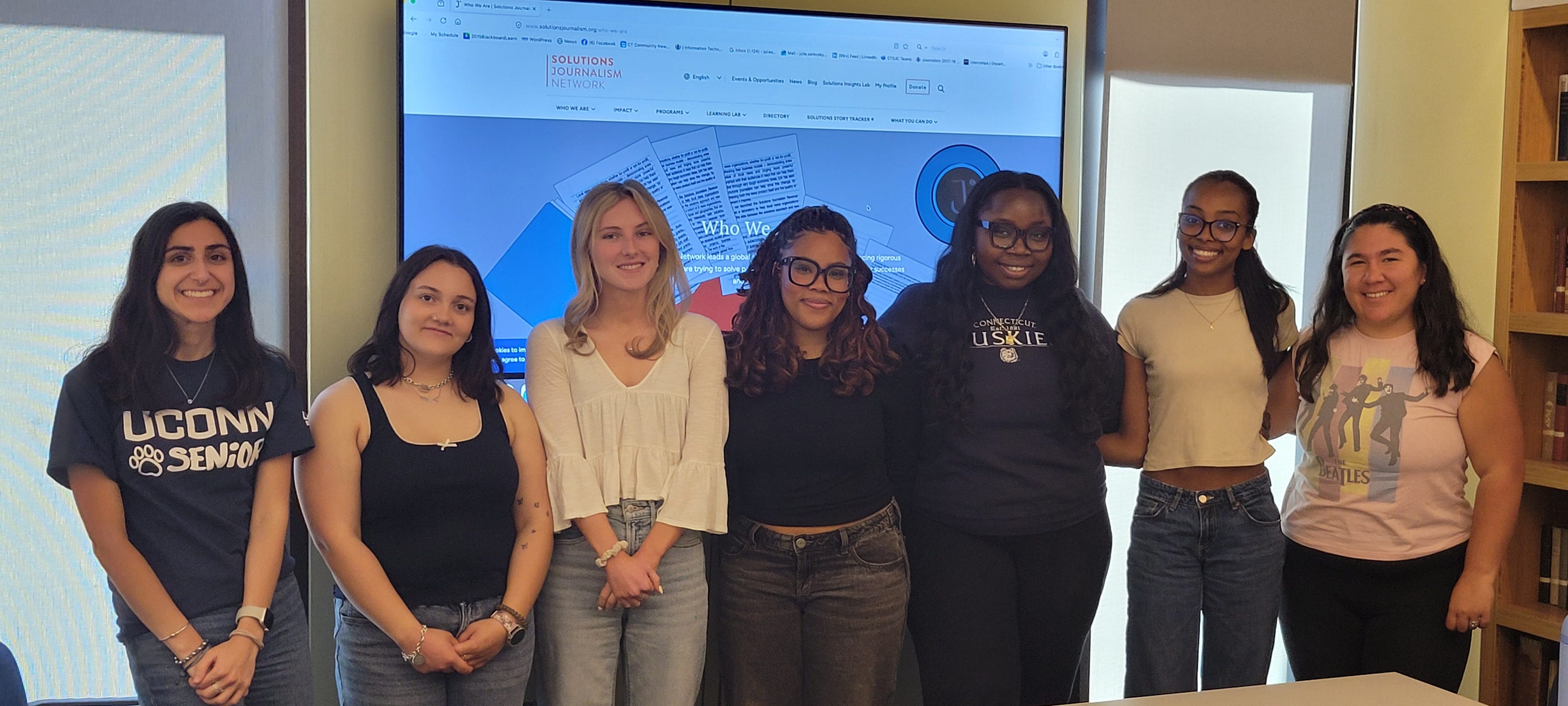
For the last two semesters, students at colleges and universities across Connecticut have been hard at work learning the fundamentals of Solutions Journalism, and then putting those principles to work in their reporting.
It’s resulted in a major project on solutions approaches to youth mental health on campus.
The data show that the number of young people experiencing serious mental health challenges has been on the rise for more than a decade — a trend that was only exacerbated by the pandemic. A lot of journalism in that time has focused our attention on the problem. But we wanted a fresh approach.
By joining Solutions Journalism’s 2025-26 Student Media Challenge cohort we got funding to train our faculty and students on the basics of solutions journalism, and we set them loose to find out what’s working, and what’s not working, among the solutions being proposed to help stem the mental health crisis.
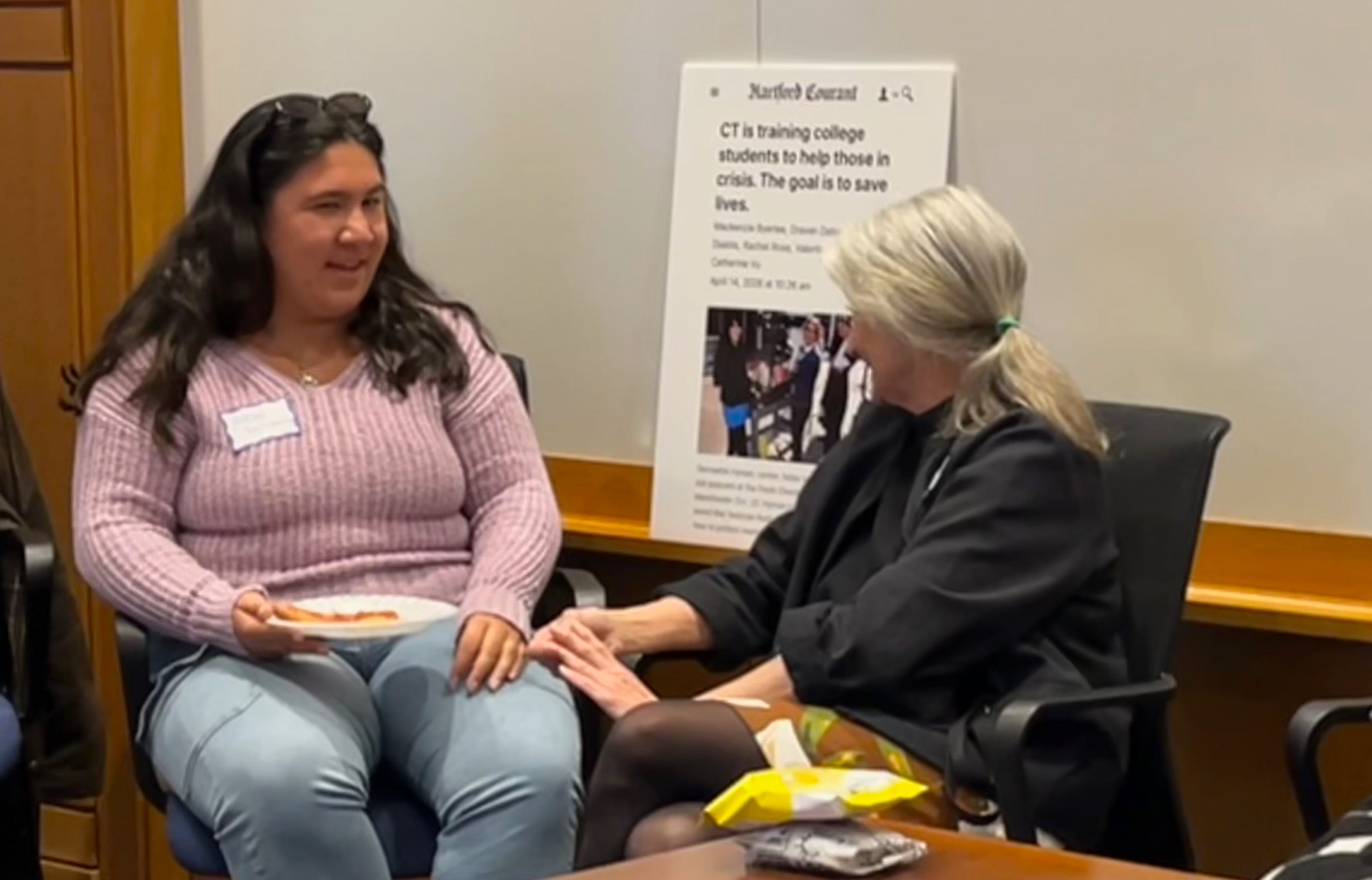
At Southern Connecticut State University, Prof. Jodie Gil’s Digital Reporting & Writing class tackled a collaborative project, with six students researching aspects of campus suicide prevention programs. The final story, How Connecticut is training college students to help prevent suicide, also included reporting and photography from two students at CT State Manchester, achieving one of our project goals of stimulating cross-campus collaboration.
The story was republished by Southern News, and also across several of our statewide professional media partners, WHSU Public Radio, CTNewsJunkie, and the Hartford Courant. It was also included in Solutions Journalism’s Story Tracker.
This story formed the basis of a discussion on WILI Radio in Willimantic, featuring two of the student reporters, Valentina Toro and Mackenzie Byerlee, and hosted by John Murphy, adjunct faculty at Eastern Connecticut State University.
Toro will also include her learning journey with Solutions Journalism in a poster presentation for Southern’s Undergraduate Student Research and Creativity Conference in early May.
“Through this partnership, I contributed to stories that connected campus issues to broader statewide conversations,” Toro said. “It allowed me to work alongside student journalists from different institutions, learn new approaches to solutions-oriented reporting, and engage with professional editors who challenged me to think more critically and write with greater purpose.
“Overall, the experience has helped me grow as a more thoughtful, community-focused journalist.”
At UConn, Prof. Julie Serkosky’s Publication Practice class devoted their spring semester to the project, working on eight different stories — all taking a deep dive into different aspects of campus mental health.
Senior Mikayla Bunnell focused on pet therapy, which has grown in popularity at UConn and other universities in recent years. Her story, Dog therapy catches on at UConn, other colleges across the U.S. was republished in the Hartford Courant and the CT Examiner.
Bunnell was most excited about the hands-on nature of building a solutions story, attending therapy sessions and observing interactions.
“I spent a lot of my time listening rather than asking questions,” she said. “I got first-hand experience with the solution I was writing about, which I think helped me explain the concept better and benefited my story overall.”
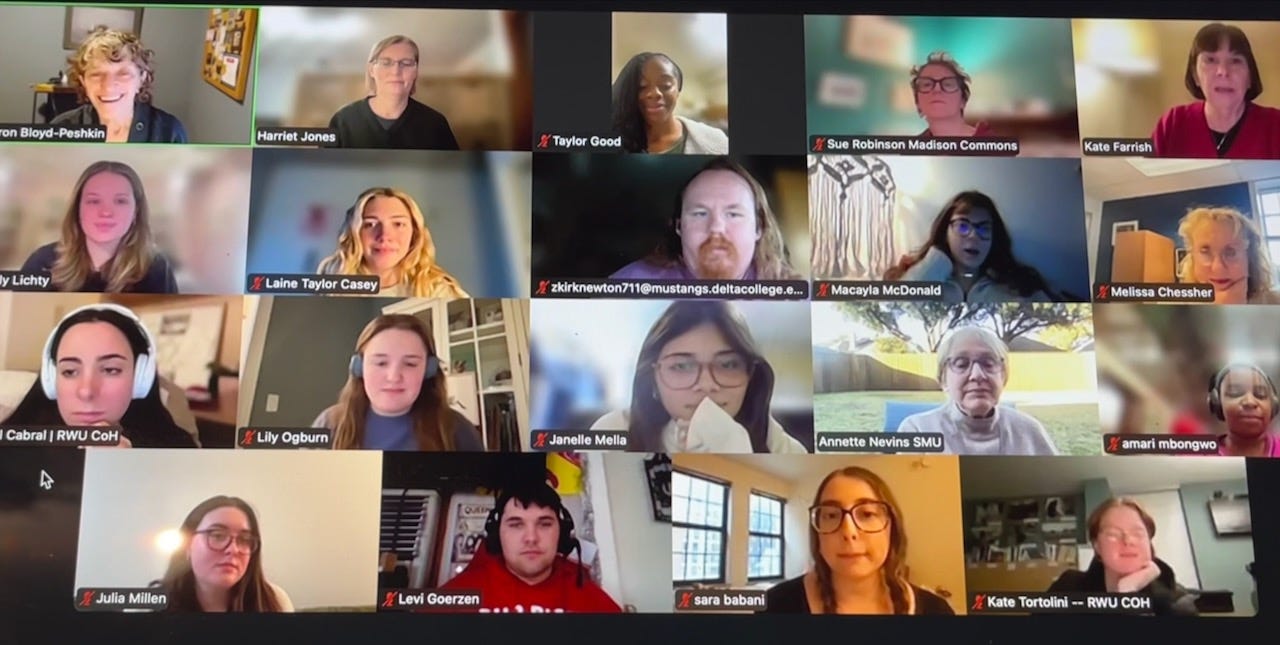
Every story has involved discussion and re-editing with the help of our Solutions Journalism Coordinator, the tireless Sharon Bloyd-Peshkin, who has advised on how to fulfill the rigorous Four Pillars of Solutions Journalism in each piece.
Gianni Salisbury talked about the extensive research she had to do to nail down her story about approaches to student bereavement.
“For this story, I had to talk to experts for inspiration first because the solution was not obvious or previously reported on,” she said. “It was something I had to find and something only people in the field of grief and college policy knew about.”
The resulting story, Grief, loss and the college student, explains that up to 44% of college students experience the death of a loved one during any two-year period in school.
The solution highlighted: formal student bereavement policies that can guide those who are grieving and help support them as they continue their education.
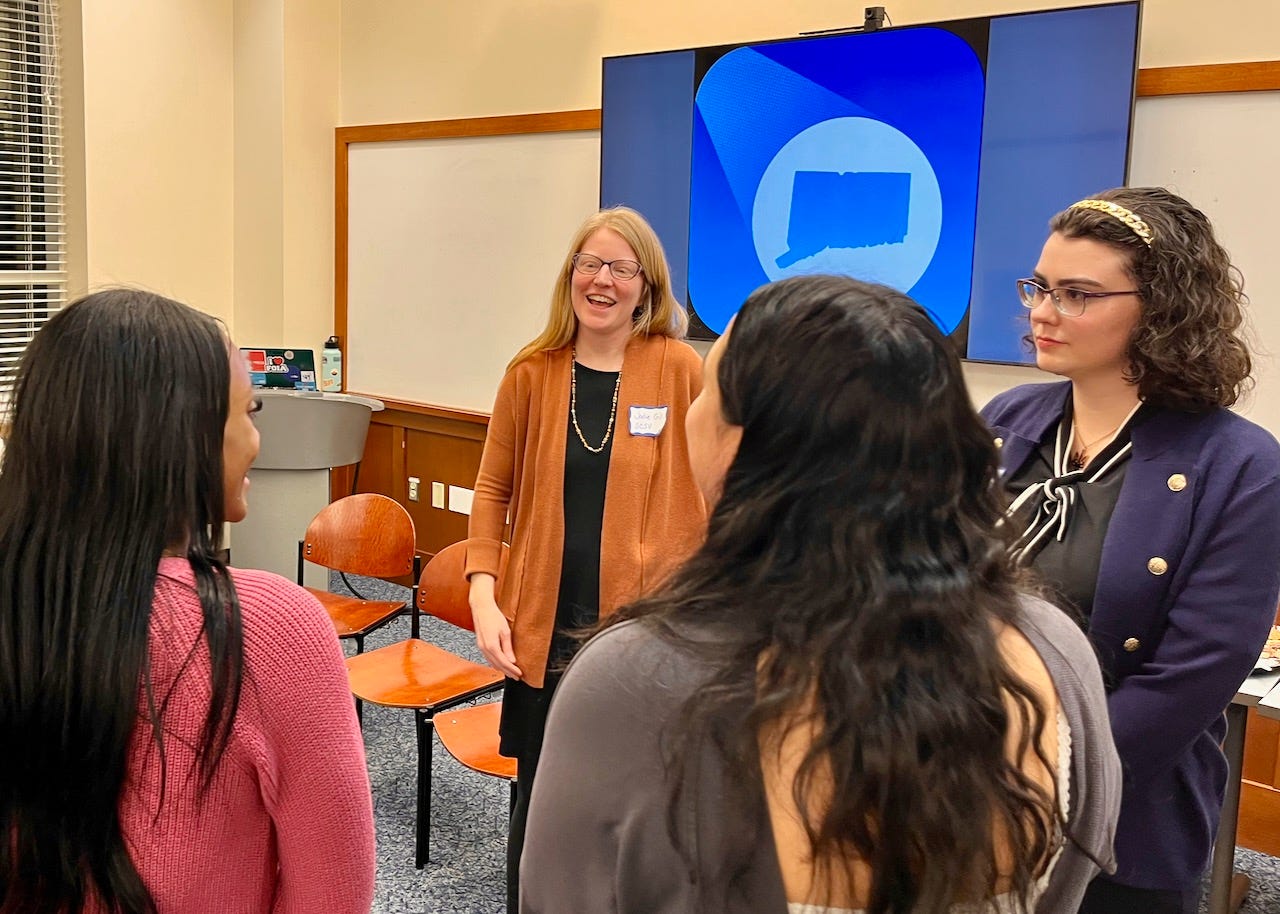
Our Solutions Journalism project has also inspired us to bring many institutions across the state together to talk about the solutions approach and how it can be implemented more widely.
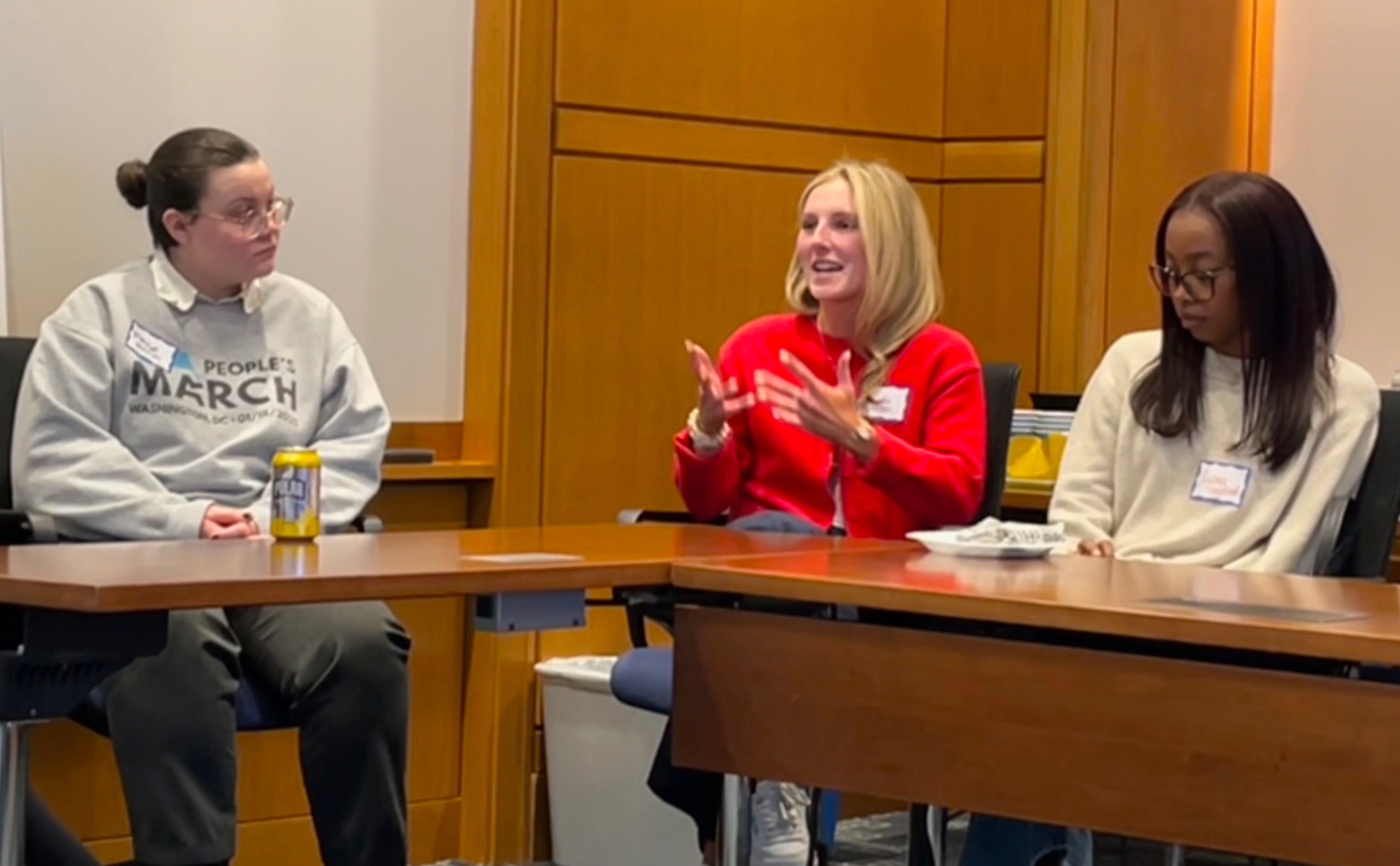
During a networking event at UConn Hartford in April, faculty and students from six different journalism programs convened to share what we’ve learned and brainstorm approaches to ongoing collaboration. We also hosted professional editors Greg Stroud and Robin Breeding from CT Examiner.
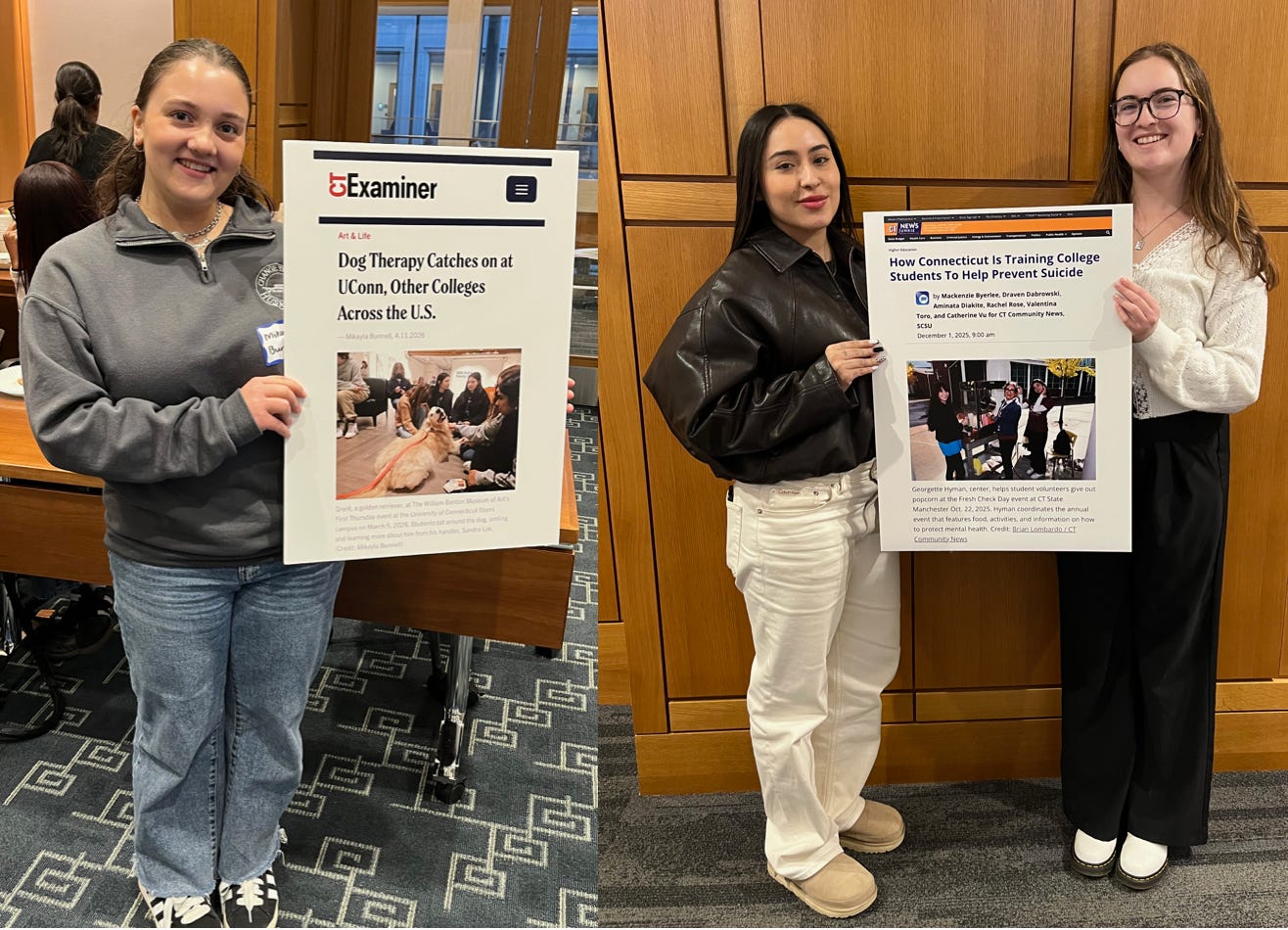
Our UConn and Southern students were joined by a student coordinator from CT State Tunxis and faculty from Central Connecticut State University, CT State Manchester and the University of Hartford.
Many students shared that they’ve learned and implemented a range of new techniques at the core of Solutions Journalism, including complicating the narratives, which challenges us as reporters to embrace complexity and beware of confirmation bias.
Many have also employed an interviewing approach known as “looping,” to help draw out those complex narratives.
Student reporter Sara Bedigian followed these principles in her forthcoming story on Sandy Hook survivor Audrey Nichols, who is striving to pass gun violence prevention legislation.
“When I conducted the interview with Audrey it was challenging but I used the narrative techniques we discussed, which helped,” Bedigian said. “I have not interviewed someone before who had experienced the trauma she did. When I told her about the solutions lens and how I am going to focus the story on her advocacy, it made the story easier for me to tell and for her to open up and share.”
We’ll be releasing more stories from our Solutions Journalism project in coming weeks, including contributions from Central Connecticut State University and CT State Tunxis. We will also feature more about this year of learning on our Bylines New Voices podcast.
Our stories are gathered our our Solutions Journalism landing page.
And of course thank you so much to our dedicated faculty, without whom we could not succeed on this learning journey. Marie Shanahan, Kate Farrish and Julie Serkosky of UConn; Jodie Gil and Cindy Simoneau of Southern Connecticut State University; Theodora Ruhs of Central Connecticut State University; Stephania Davis of CT State Manchester and Evan Goldstein of CT State Tunxis; John Murphy of Eastern Connecticut State University.